Bidirectional charging: the next step in sustainable motoring
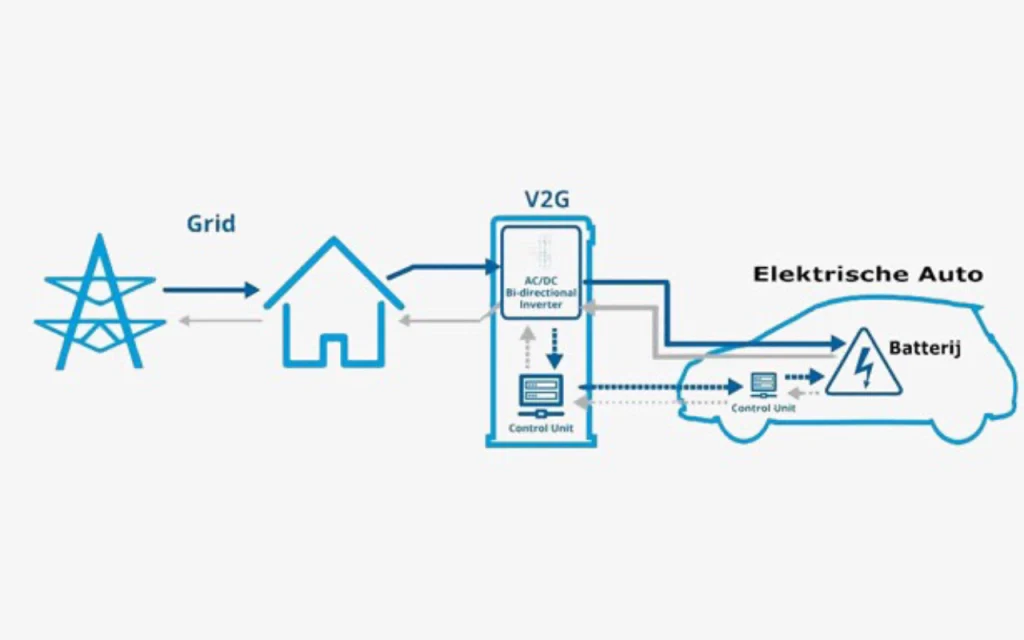
💡Bidirectional charging, or vehicle-to-grid (V2G), refers to cars' ability both to charge and to feed electricity back into the grid. Returning energy from cars relieves pressure on the electricity network, absorbs peaks in renewable generation and provides financial benefits for users.
☀️🌍 We Drive Solar, Stedin, Gemeente Utrecht and several property developers began offering shared cars that charge using solar power and can return energy to the grid a few years ago. This project was a world first.
♻️📈 Feeding electricity back into the grid provides financial benefits through dynamic energy tariffs and also relieves pressure on the network at peak times. Some obstacles remain, such as adapting charging points to enable energy to flow back.
⚡🔌 Car manufacturers including Kia Nederland, Hyundai Motor Nederland, Renault, Polestar and Volvo Cars have announced that their future models will be able to return energy to the grid. These cars charge via an AC connector and contribute to the growth of bidirectional charging.
🔋☀️ New models coming to market will be able to charge and discharge via an alternating-current AC connector, the same type most cars already use. The V2G inverter is located inside the car. Some experts advocate placing the V2G inverter in the charging point, allowing the connector to charge and discharge using direct current. This could make the car less complex, although the charging point may be more expensive.
💡💼 Security for cars and charging points is crucial, as is RDW approval. The tax system and the continuous balancing of charging and discharging remain issues to address in the future.
🔋♻️💡 Technology for returning energy to the grid is developing rapidly. Standardisation, security and regulation remain challenges, but bidirectional charging offers promising opportunities for a better-performing electricity network and a more sustainable energy supply.
Omega-Parkeren en Mobiliteit is enthusiastic about this development! It offers financial benefits and reduces pressure on the network at peak times, while also opening the door to new, integrated mobility solutions. ♻️💡🚙
Source: RTL Nieuws