Electric cars could help address electricity grid congestion
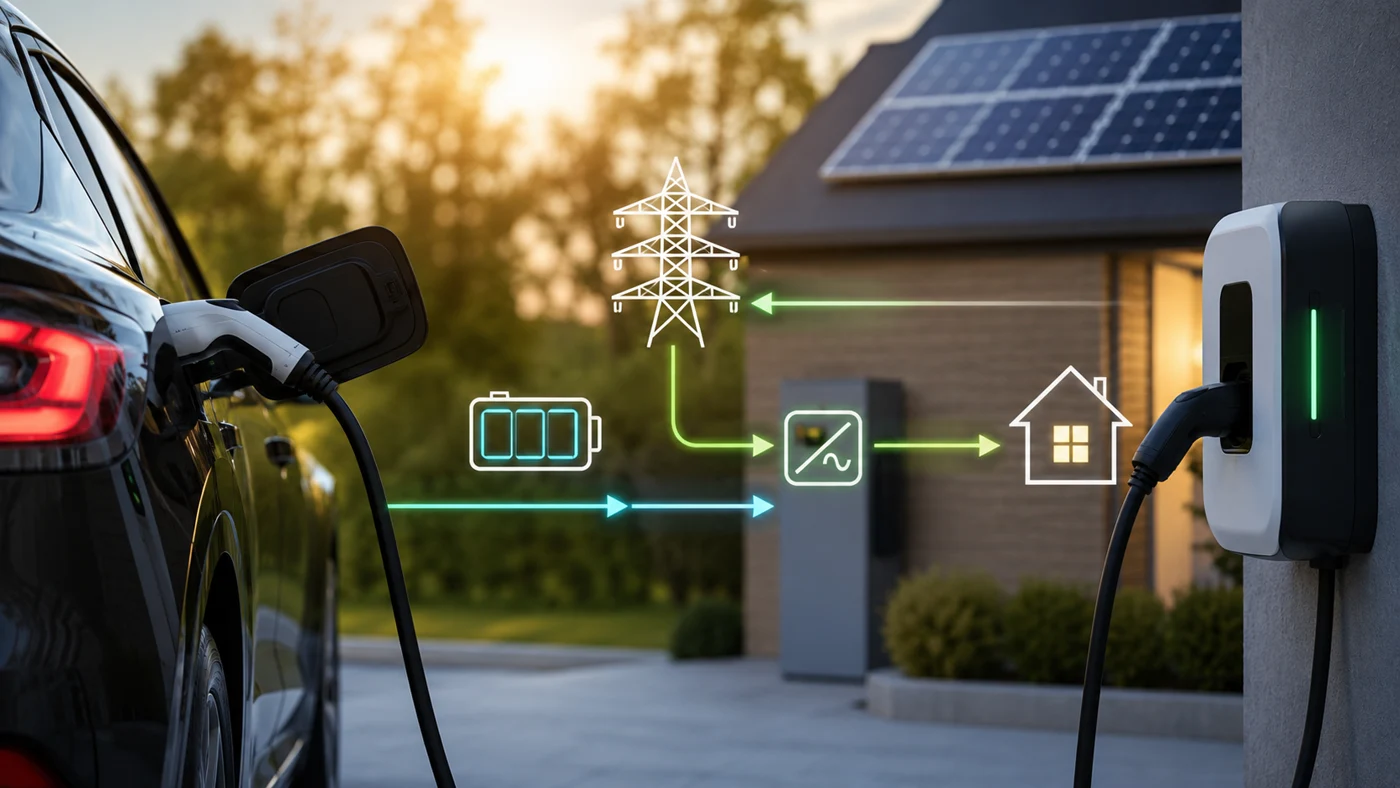
The role of electric cars in the energy transition appears to be broadening. Electric vehicles were long seen primarily as an additional burden on the electricity grid. Energy companies, car manufacturers and grid operators are now actively exploring their potential as temporary energy storage.
This follows developments in bidirectional charging, also known as Vehicle-to-Grid (V2G). This allows a vehicle to draw electricity and temporarily feed it back to a home or the electricity grid.
Vattenfall, Hyundai, Kia and Renault are among the companies working on applications that make electric vehicles part of the energy system. Several practical trials are now under way in the Netherlands.
Electric vehicles as temporary energy storage
According to those involved, bidirectional charging creates an opportunity to better balance electricity supply and demand. Electric vehicles are parked for much of the day, while their battery capacity is considerably greater than that of an average home battery.
A home battery often has around 10 kWh of storage, whereas modern electric vehicles commonly have battery packs of approximately 50 to 80 kWh.
Smart charging software allows vehicles to charge when renewable energy is plentiful, for example during high solar generation. At peak times on the grid, some of this stored energy can then temporarily be fed back.
The evening peak, approximately between 16:00 and 21:00, is a particular focus within the Dutch energy system.
Grid congestion increasingly affects development projects
This development comes as grid congestion directly affects housing construction, business activity and development projects in an increasing number of locations.
Waiting times for new or higher-capacity connections are growing in several regions. For developers, municipalities and property owners, energy supply is therefore becoming an increasingly important part of projects' spatial and financial feasibility.
This also creates a stronger relationship between mobility, parking, charging infrastructure and energy management.
Larger housing developments, parking hubs and mobility schemes in particular are increasingly considering:
- Smart charging;
- Energy management within parking facilities;
- Peak loads on the grid;
- Shared charging facilities;
- Combining mobility with local energy storage.
Bidirectional charging could eventually play a complementary role in such solutions, although many applications are still being scaled up.
Pilots must demonstrate feasibility
Vattenfall is among the companies starting practical trials in the Netherlands, allowing households to use special charging equipment to charge and discharge vehicles in a controlled way.
The technology itself has existed for some time, but large-scale deployment has proved complex for years because it depends on multiple systems and parties. Vehicle technology is only one element, alongside software, charging infrastructure, grid management, regulation and warranties.
Not all vehicles support bidirectional charging yet, and suitable charging infrastructure remains limited.
Consumer behaviour also remains important. The system only works optimally if vehicles stay connected long enough and users are willing to make some battery capacity available for energy management.
Car manufacturers are seeking to reduce concerns about battery wear by setting limits on charging and discharging cycles.
Mobility and energy become more closely connected
Developments in bidirectional charging show how mobility issues are becoming increasingly intertwined with energy infrastructure and grid capacity.
Parking and mobility have traditionally centred on accessibility, capacity and traffic flows. Energy supply, charging infrastructure and grid load are now playing an increasingly important role in new developments too.
For property developers, municipalities and mobility advisers, this means parking and mobility solutions are increasingly part of wider energy and sustainability challenges.
Omega previously wrote in 2023 about developments in bidirectional charging and their potential impact on mobility and energy supply. The technology is now attracting increasing attention from grid operators, car manufacturers and energy companies.
All articles